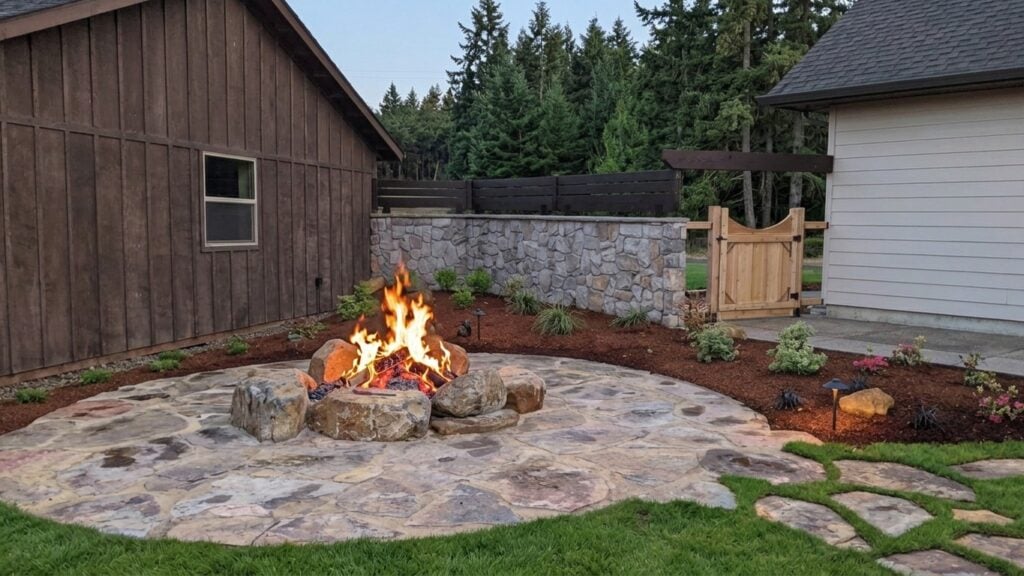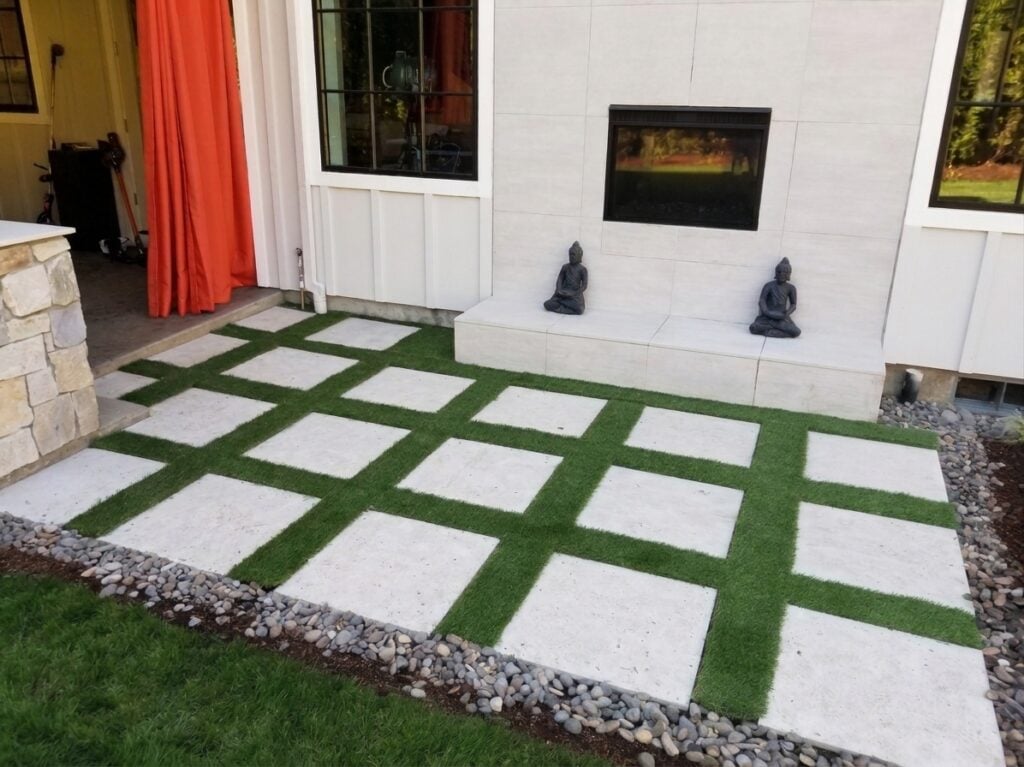
Iconic Landscapes builds paver patios, walkways, seat walls and fire pit areas across the Portland Metro, including Lake Oswego, West Linn, Wilsonville, Sherwood, Newberg, Tigard, Tualatin, Beaverton, Hillsboro and Aloha. Every patio starts with excavation, a compacted gravel base and a slope that moves water away from your house, all part of our scope rather than a separate contractor you have to hire. Owner Jeff Froeber is a former licensed landscape architect with 30 years in landscape design and construction, and he measures, plans and writes every estimate himself. Call 503-799-7555 for a free estimate.
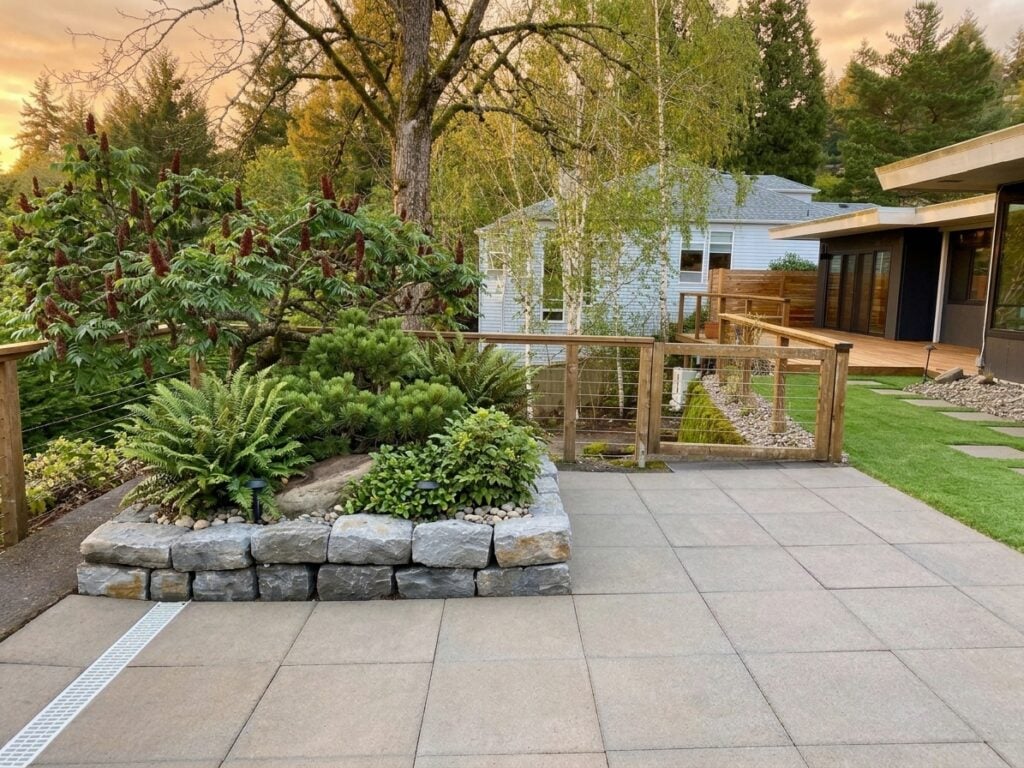
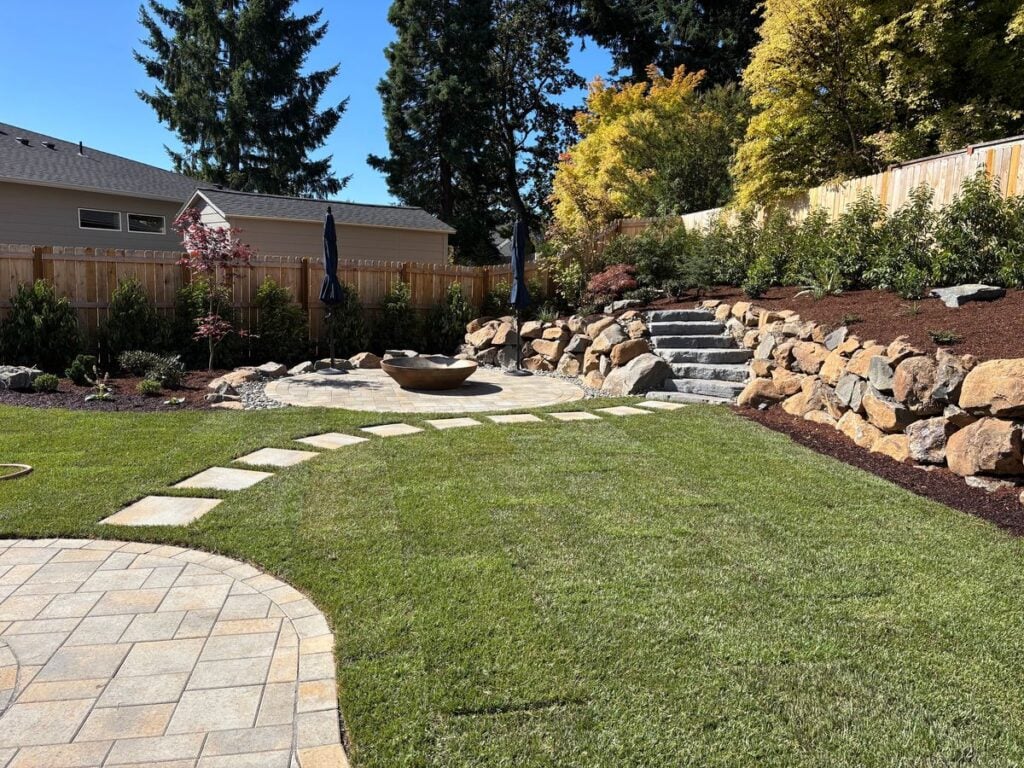
A paver project can combine a few of these. We plan them together so the base, the grades and the edges all line up.
Patios sized for how you use the yard, from a grill pad to a full outdoor living area, in the pattern and color you choose.
Paver walks that connect the patio, driveway, garden and gate, built on the same base so they stay level.
Built-in seating around the edge of a patio that doubles as a border.
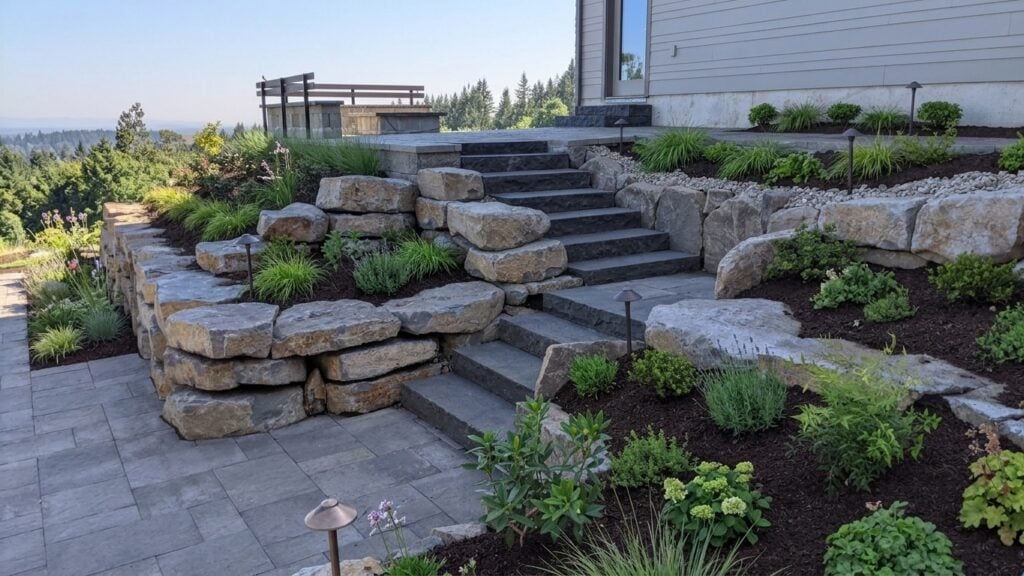
Paver or block steps where the yard changes grade. See retaining walls.
A fire pit built into the patio or set in its own paver circle. See fire pits.
A contrasting border and an edge restraint that keeps the field of pavers from spreading.
Request Free Quote
Free on-site walkthrough and a written price.
Or call 503-799-7555
Much of the Portland area sits on silt and clay that drains slowly, and Portland gets about 37 inches of rain a year, nearly all of it between October and May.
Water that sits under a patio softens the base, and a soft base lets pavers sink and shift. A paver patio flexes instead of cracking, and a paver that settles can be lifted and reset, but only if the base under it is right.
Industry guidance calls for at least 4 inches of compacted base under a patio in ideal conditions, and 50 percent more for each condition that is not ideal, like weak or poorly drained soil. An Oregon paver maker calls for compacting the gravel in 2 inch lifts under a 1 inch sand bed, and the patio slopes 1 to 2 percent so water runs off. Got a slope to deal with? See retaining walls
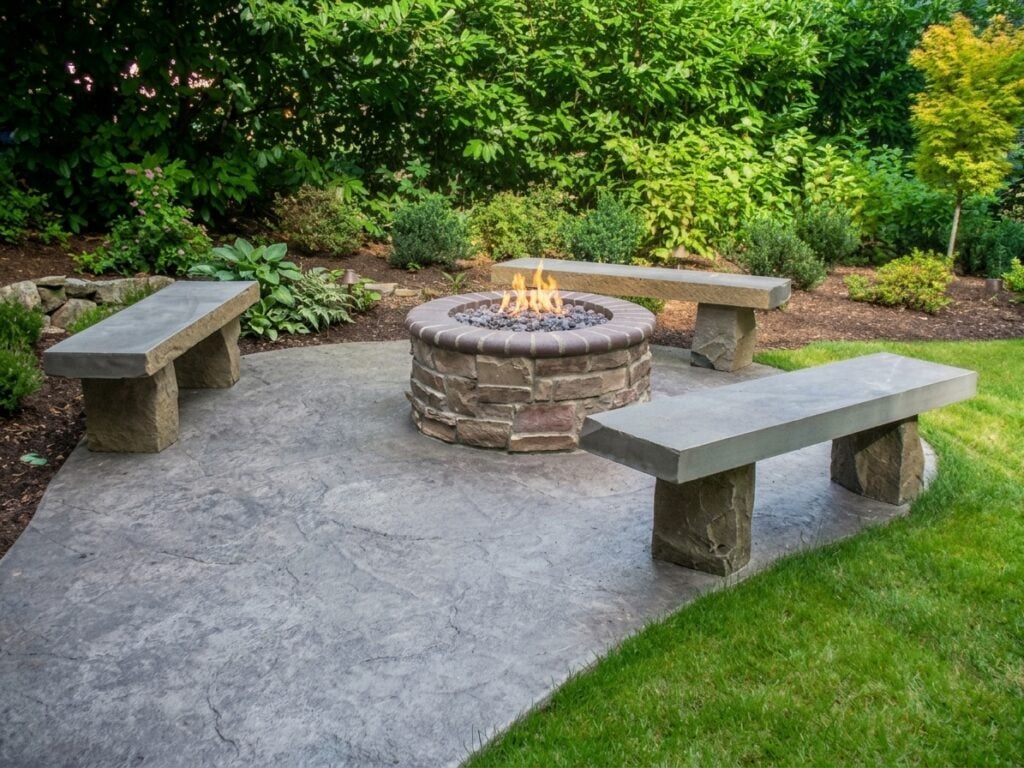
A paver patio is only as good as what is under it. The base gets planned as carefully as the pavers on top, because that is the part you cannot fix later without tearing it up.
Excavation, gravel and compaction are planned with the patio.
The two things this company is built around.
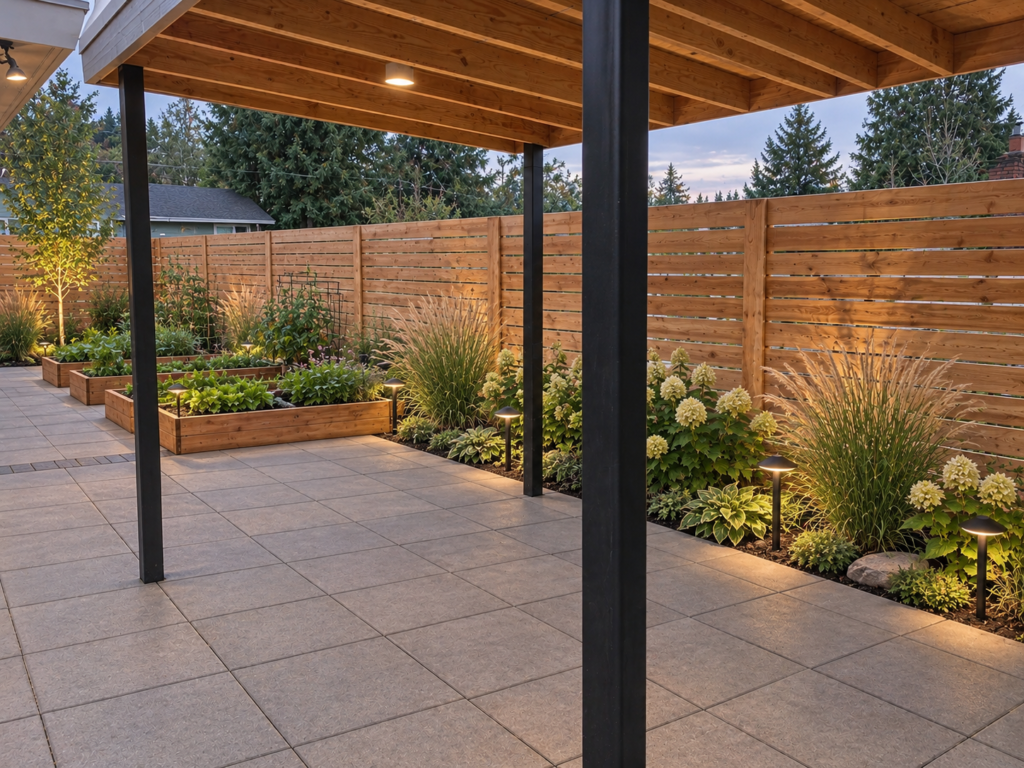
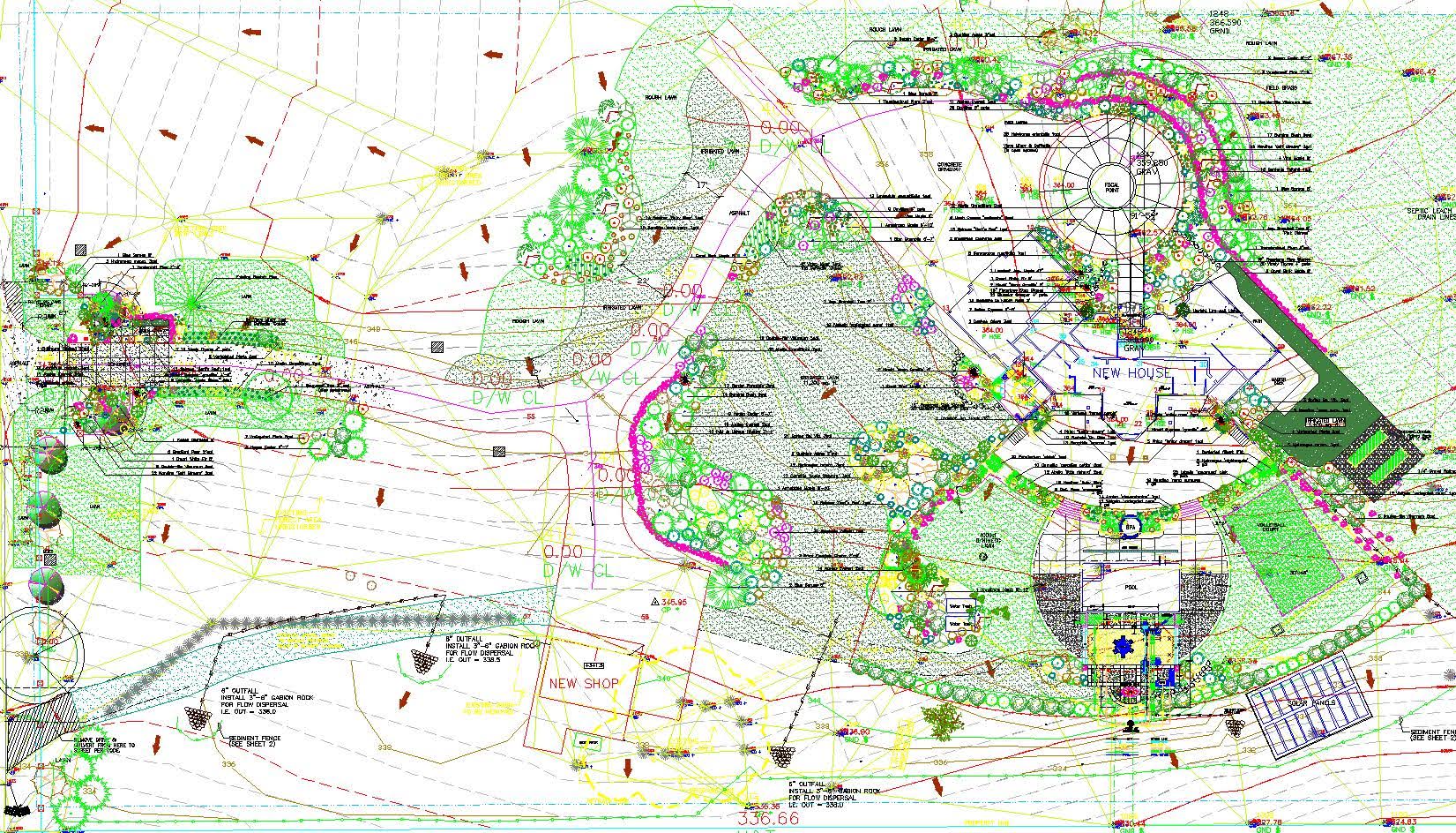
The patio, steps, walls and lawn get designed together.
Jeff measures, plans it with you and writes the estimate.
Free estimates · Written price · One designer
1
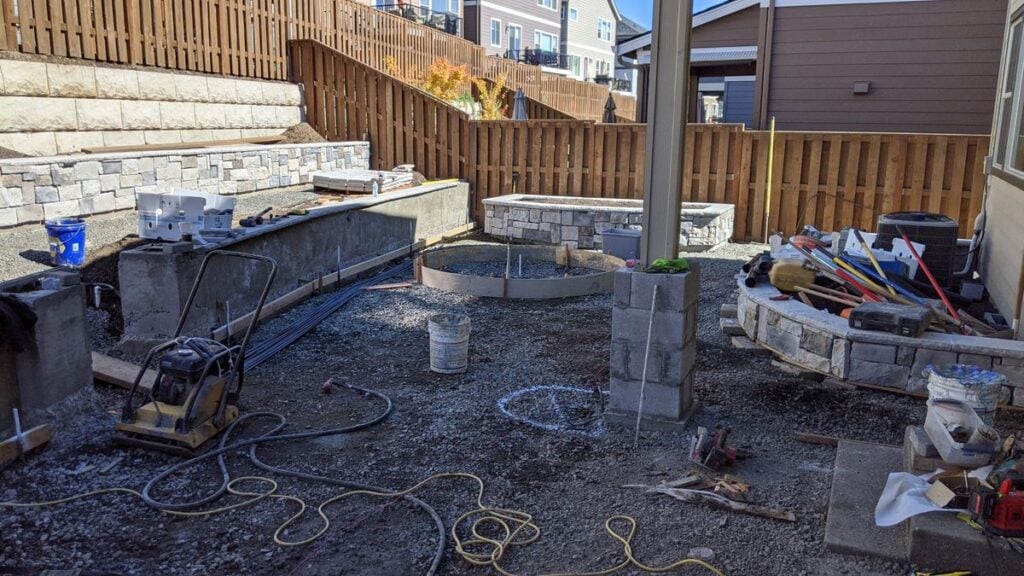
We measure, check the grade and drainage, and mark out the patio with you.
2
We dig out, haul off the spoils, and compact the gravel base in layers.
3
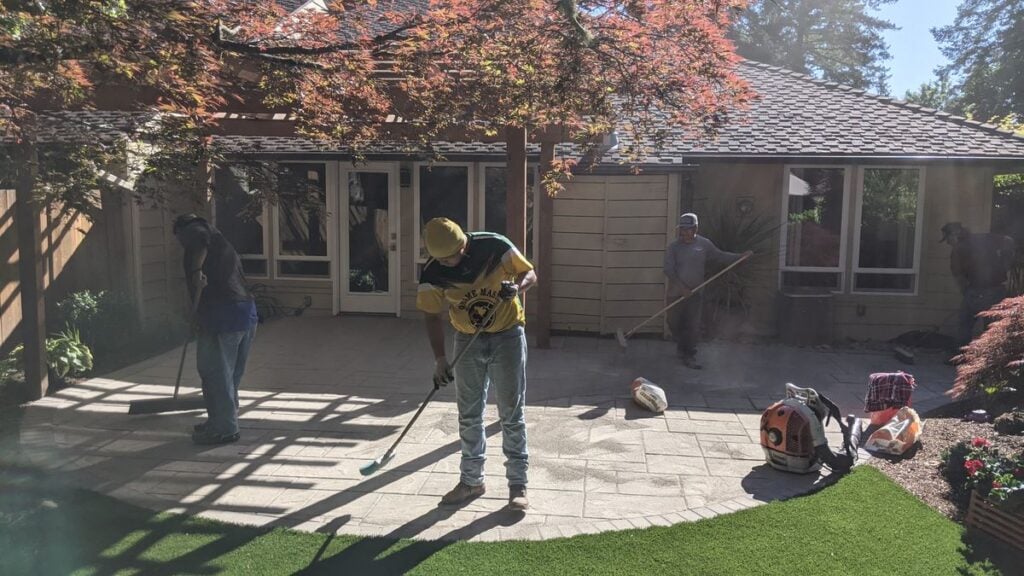
We lay the pattern, cut the borders, set the edge restraint and sweep in the joint sand.
4
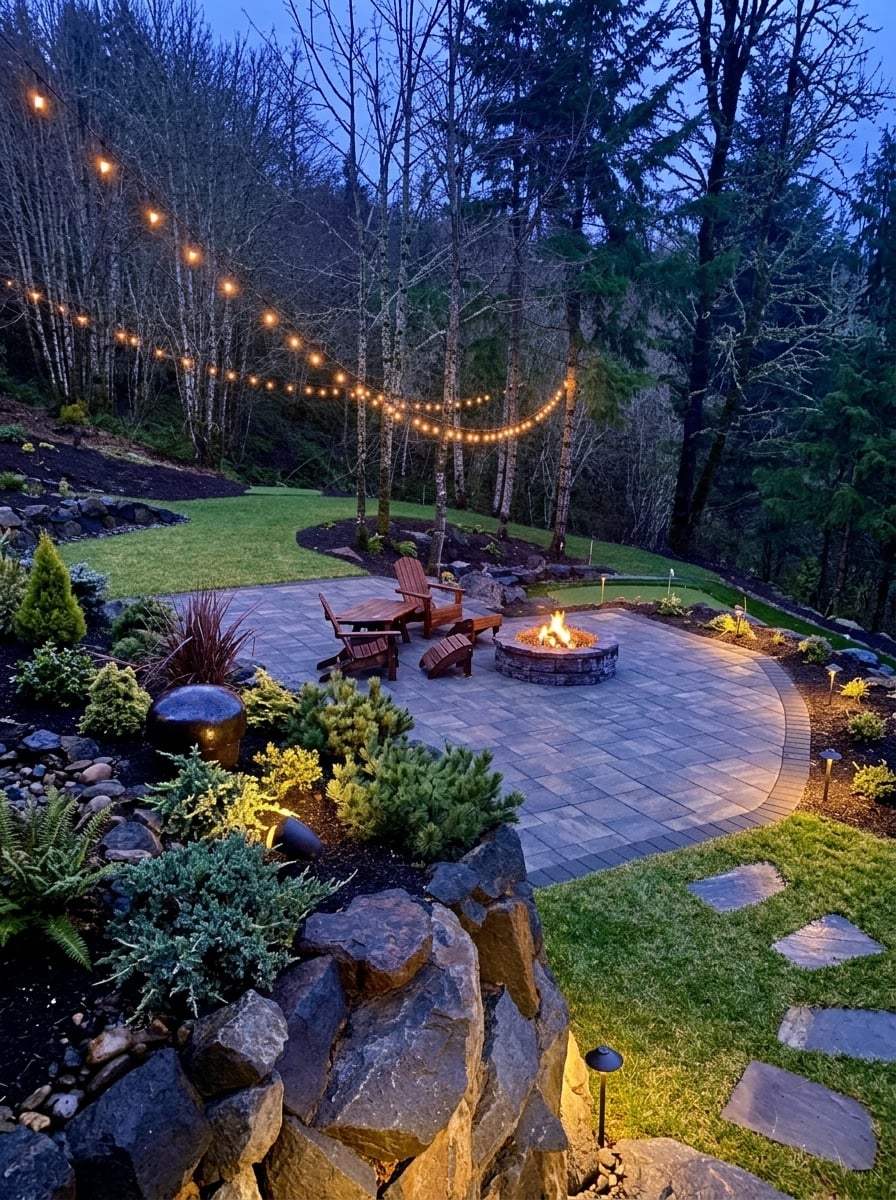
We walk the finished patio with you before we call it done.
Starting at $25 per sq ft installed
Every yard prices out differently. Your written price is set after a free on-site walkthrough, and these are the things that move the number most.
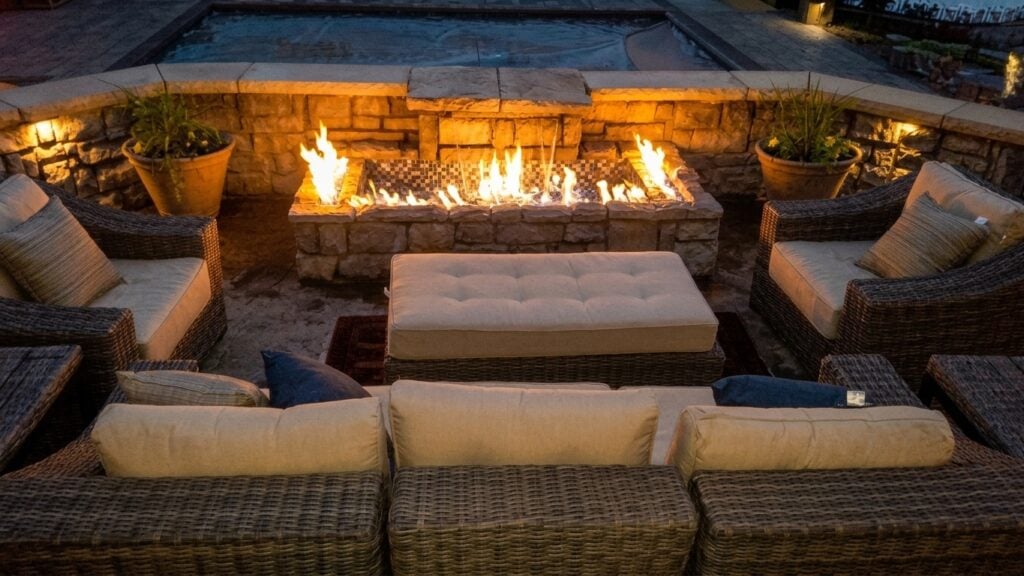
We build paver patios across the Portland Metro, including Lake Oswego, West Linn, Wilsonville, Sherwood, Newberg, Tigard, Tualatin, Beaverton, Hillsboro and Aloha. A paver patio can replace a tired concrete slab, give a new-build backyard its first real outdoor room, or tie a fire pit, seat walls and walkways into one space.
Paver patios start at $25 per square foot installed. The biggest factors are size, digging and grading, equipment access, the paver you pick and any walls, steps or fire pit. You get a written price after a free walkthrough, before anything starts.
Iconic Landscapes is a design-build landscape and hardscape contractor that builds paver patios, walkways, seat walls and fire pit areas across the Portland Metro, from Hillsboro and Beaverton to Lake Oswego, West Linn and Wilsonville. Owner Jeff Froeber, a former licensed landscape architect with 30 years of experience, measures, plans and writes every estimate himself. Call 503-799-7555 for a free estimate.
Pavers flex with the ground instead of cracking, and a paver that settles or breaks can be lifted and reset. Poured concrete can cost less up front but cracks and cannot be patched to match. On clay soil with a long wet season, that repairability is a common reason homeowners choose pavers.
Concrete pavers are rated to last about 25 to 50 years, and natural stone longer. How long a patio lasts depends mostly on the base under it and how well water drains away.
The common causes are a thin gravel base, poor compaction, no fabric between the base and the clay, and water that sits under the patio. Edges without a restraint also let pavers spread over time.
A wash once a year and new joint sand every few years. Polymeric joint sand helps keep weeds and ants out.
Oregon’s residential code exempts ground-level slabs, sidewalks and driveways from building permits. Walls, covered structures and gas lines can need one, so check with your city or county for your address.
Call or text 503-799-7555 or start a chat for a free walkthrough anywhere in the Portland Metro. One designer, from the first measurement to the final walkthrough.